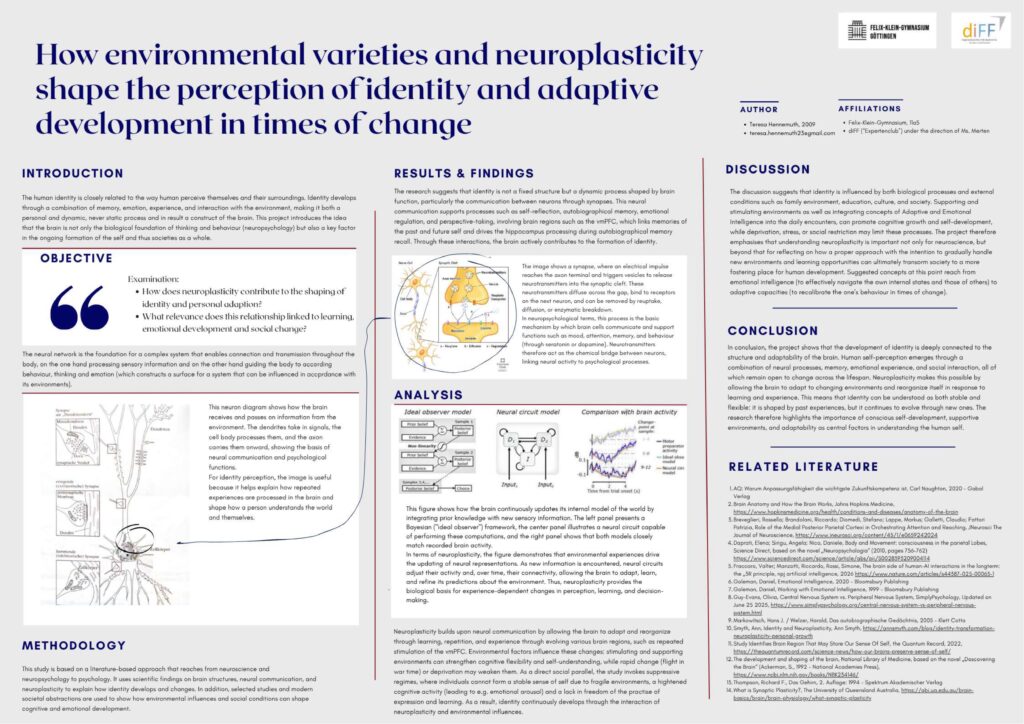
Neuropsychology, Identity Perception, and Environmental Change
Human identity is not a fixed characteristic but a dynamic psychological process that continuously develops through interactions between the brain, personal experiences, and the surrounding environment. In neuropsychology, identity perception refers to the way individuals understand and define themselves through memories, emotions, beliefs, social relationships, and life experiences. This process is closely linked to neuroplasticity, the brain’s ability to reorganize its neural connections in response to learning, adaptation, and environmental influences.
Several key concepts help explain how identity develops. Neural networks are interconnected groups of neurons that process information and store experiences. Synaptic plasticity describes the strengthening or weakening of connections between neurons based on repeated activity. Through these mechanisms, experiences become integrated into the brain’s structure and influence how people perceive themselves and the world around them. Environmental determinants such as family, education, culture, social relationships, technology, and major life events continuously shape these neural pathways. Positive and stimulating environments can support resilience, learning, and self-development, while chronic stress, social isolation, or instability may negatively affect emotional regulation and self-concept.
Modern neuropsychological research increasingly views identity as the result of a constant interaction between biological processes and environmental conditions. The brain actively updates internal models of reality, integrating new information and experiences. This adaptive process allows individuals to modify behaviours, beliefs, and goals when facing social, cultural, or personal change. As a result, identity remains flexible throughout life rather than being permanently established in childhood or adolescence.
Future research may further explore how advanced technologies influence identity formation. Artificial intelligence, virtual reality, and brain-computer interfaces could provide new ways to study neural adaptation and personalize educational or therapeutic interventions. Researchers are also investigating how digital environments and online social interactions reshape self-perception, particularly among younger generations. These approaches may improve mental health treatments by supporting adaptive learning, emotional regulation, and cognitive flexibility.
The societal significance of this research is substantial. Understanding the relationship between neuroplasticity and identity can help educators create more effective learning environments, assist psychologists in developing targeted therapies, and inform policies that promote social well-being. In a rapidly changing world characterized by technological innovation, globalization, and social transformation, the ability to adapt is increasingly important. Neuropsychological insights suggest that supportive environments not only foster individual growth but also strengthen collective resilience, helping societies respond more effectively to future challenges and opportunities.
This is my central research poster, exhibited on June 16th 2026 in the FKG in Göttingen: