Neuropsychology is the scientific study of how the brain influences thinking, emotions, behavior, and cognition. It emerged from the intersection of psychology, medicine, and neuroscience, and has been shaped by brilliant scientists whose discoveries transformed our understanding of the human mind. While some figures are widely recognized, many women also made groundbreaking contributions that deserve equal attention. Together, these researchers demonstrated extraordinary intelligence, curiosity, and dedication to improving human health and knowledge.
Early Foundations
One of the earliest pioneers was Paul Broca (1824–1880), a French physician and anatomist. Broca studied a patient who could understand language but could barely speak. After the patient’s death, Broca found damage in a specific region of the left frontal lobe. This area, now known as Broca’s area, showed that language functions are localized in the brain rather than spread evenly throughout it. His work laid the foundation for modern cognitive neuroscience and clinical neuropsychology.
Another key figure was Carl Wernicke (1848–1905). Wernicke identified a different brain region involved in language comprehension. His findings demonstrated that speaking and understanding language depend on distinct but connected brain systems. This insight continues to guide the diagnosis and treatment of language disorders after stroke or brain injury.
The Birth of Modern Neuropsychology
A major architect of modern neuropsychology was Alexander Luria (1902–1977). Luria combined psychology and neurology to study patients with brain injuries. Instead of viewing the brain as a collection of isolated parts, he proposed that complex mental functions arise from interacting brain systems. His detailed case studies and assessment methods influenced neuropsychological practice worldwide and remain important in rehabilitation today.
Another influential scientist was Donald Hebb (1904–1985). Hebb proposed that learning occurs when neurons repeatedly activate together, summarized by the famous principle „cells that fire together wire together.“ His theory helped explain memory and learning and became one of the foundations of modern neuroscience and artificial intelligence.
Remarkable Women in Neuropsychology
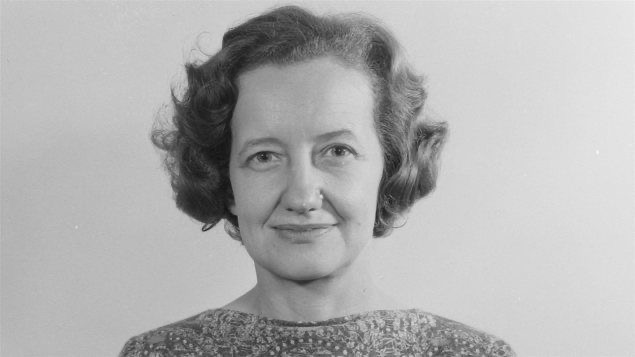
Among the most influential women was Brenda Milner (1918–2024), often called the „founder of neuropsychology.“ Milner studied the famous patient H.M., who underwent surgery that removed parts of his temporal lobes. She discovered that different memory systems exist in the brain. H.M. could not form new conscious memories but could still learn new motor skills. This revolutionary finding transformed scientific understanding of memory and has influenced treatments for neurological disorders for decades.
Another pioneering woman was Marian Diamond (1926–2017). Diamond demonstrated that the brain can physically change in response to experience, helping establish the concept of neuroplasticity. Her research challenged the belief that the adult brain was fixed and unchangeable. Today, neuroplasticity underlies approaches to education, rehabilitation, and recovery after brain injury.
Patricia Goldman-Rakic (1937–2003) made groundbreaking discoveries about the prefrontal cortex, the brain region involved in planning, attention, and working memory. Her work helped explain cognitive deficits in conditions such as schizophrenia and influenced modern psychiatric research.
Another influential scientist was Elizabeth Warrington (1931–2025). She studied patients with brain damage and showed that memory, language, and object recognition consist of multiple specialized systems. Her clinical tests are still used by neuropsychologists around the world.
Understanding Split Brains and Consciousness
Roger Sperry (1913–1994) investigated patients whose cerebral hemispheres had been surgically separated to treat severe epilepsy. His research revealed that the left and right hemispheres have specialized functions. These findings transformed understanding of brain organization and earned him the Nobel Prize.
Working alongside this tradition, Michael Gazzaniga (born 1939) further explored how the two hemispheres communicate and contribute to consciousness. His work continues to shape contemporary theories about the mind and self-awareness.
Neuropsychology Today
Modern neuropsychology has expanded through the contributions of researchers such as Antonio Damasio and Hanna Damasio. Together, they demonstrated that emotions play a crucial role in decision-making and reasoning. Their work challenged the idea that rational thought is completely separate from emotion and has influenced medicine, psychology, economics, and philosophy.
Why Their Discoveries Matter
The discoveries of these scientists have profoundly affected society. They helped physicians diagnose brain injuries, strokes, dementia, and developmental disorders. They improved rehabilitation programs for people recovering from neurological damage. Their work also transformed education by showing how learning changes the brain and influenced mental health treatment by revealing the neural basis of cognition and emotion.
Perhaps most importantly, these pioneers showed that the human mind can be studied scientifically. Their research revealed that memory, language, intelligence, emotion, and consciousness arise from the activity of the brain. The history of neuropsychology is therefore not only a story of scientific progress but also a testament to the brilliance, creativity, and perseverance of both men and women whose discoveries continue to improve lives around the world.